Tripura's food economy runs through Agartala's crowded fish markets, roadside stalls serving the state's famous bamboo shoot dishes, and a growing number of small processing units supplying packaged goods across the Northeast.
The state's Food Safety and Standards Administration, sitting under the Health and Family Welfare Department, has spent much of 2026 tightening its grip on this sector, collecting hundreds of samples for lab testing and expediting licensing for operators willing to come forward. A business without current fssai tripura approval is increasingly the exception the department is actively working to close, not a gap that goes unnoticed.
What Does This Licence Actually Let You Do?
Approval under the Food Safety and Standards Act, 2006 is what authorises you to manufacture, store, distribute or sell food commercially anywhere in the state. Once cleared, your establishment gets a 14-digit licence number, the kind of identifier that officers checking compliance during a market inspection look for first.
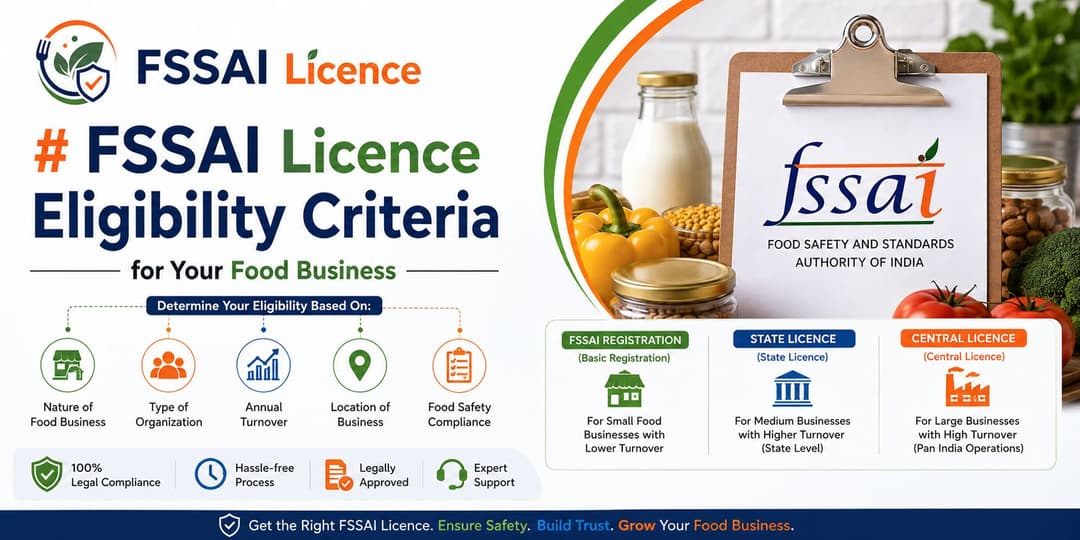
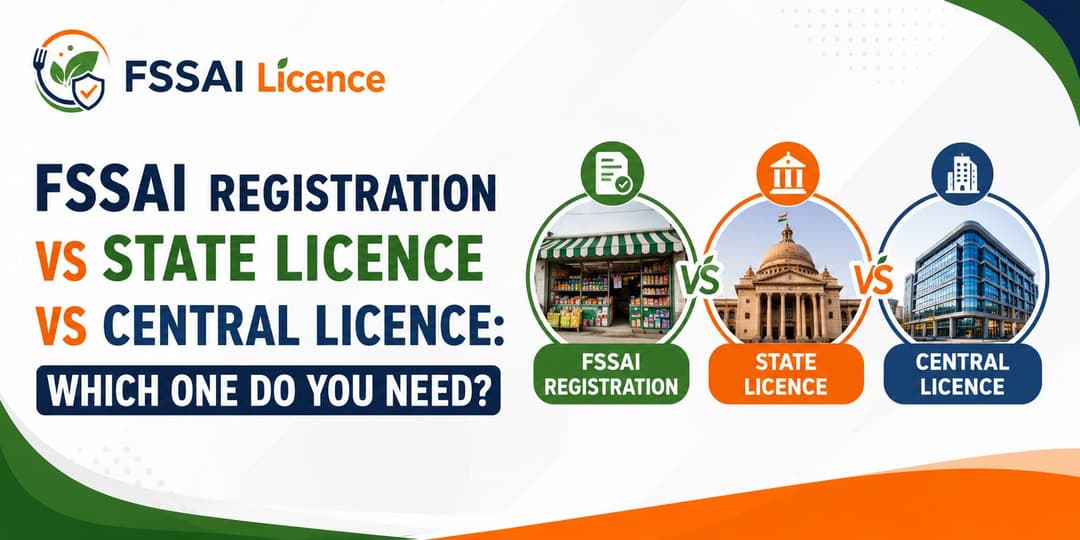
This isn't a one-size document. Tripura's Food Safety and Standards Administration issues registrations for smaller operators and full licences for bigger ones, and which category you need depends entirely on turnover and business activity, not on which part of the state you're operating from.
Who Across Tripura Needs One?
If you manufacture, pack, store, transport, distribute or sell food for money anywhere in Tripura, this applies to you. That covers Agartala's fish vendors, roadside eateries serving mosdeng and bamboo-based dishes, bakeries scattered through West Tripura, and the packaged drinking water and food processing units that have multiplied across the state in recent years.
Water and beverage units specifically carry heightened scrutiny right now. FSSAI Agartala applicants in this category should expect closer inspection of storage conditions and documentation than a standard food stall would face, a pattern that's shown up clearly in recent enforcement action elsewhere in the state.
How Active Is Enforcement Right Now?
On 4 August 2026, FSSAI suspended the licence of a packaged drinking water unit in Tripura's Gomati district after a consumer complaint about foreign material in bottled water led to an inspection. What officers found went well beyond the initial complaint: rusted chemical dosing containers, a corroded reverse osmosis storage tank, and missing records for cleaning, pest control and staff training. The licence was suspended immediately.
That case sits alongside the state's broader 2026-27 drive, which has already collected over 750 survey samples and nearly 100 enforcement samples for laboratory analysis. A State FSSAI Licence held without proper documentation behind it is exactly the kind of gap this current enforcement climate is built to catch.
Which Category Matches Your Turnover?
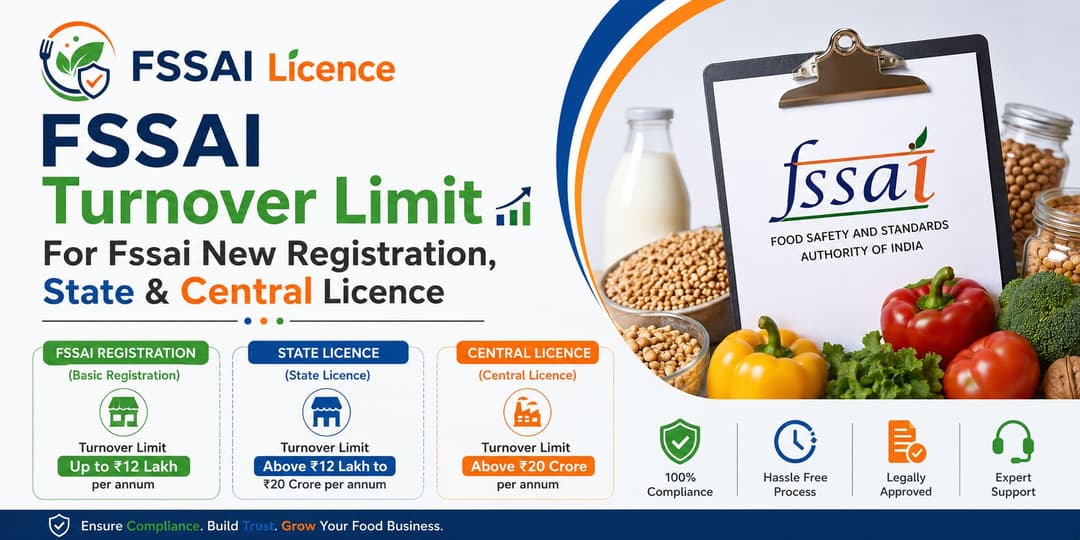
FSSAI revised its turnover thresholds nationally effective 1 April 2026, and Tripura businesses fall under the same three-tier structure used across the country.
A Basic FSSAI Licence covers turnover up to INR 1.5 crore, which takes in most roadside stalls, home-based sellers, and small manufacturers
A State licence applies once turnover crosses INR 1.5 crore and stays under INR 50 crore, covering most restaurants, bakeries, and mid-sized processing or bottling units
A Central FSSAI Licence applies above INR 50 crore turnover, and separately to importers, exporters and large manufacturers regardless of revenue
Given how small Tripura's overall business scale tends to run compared to larger states, most operators here land in Basic or State categories, with Central licensing staying relatively rare outside a handful of larger processing operations.
What Do You Need Before You Apply?
What you'll gather depends heavily on whether you're running a customer-facing food business or actually making the product yourself.
If you're running a shop, stall or restaurant: A straightforward retail or service operation needs proof of who you are and where you're operating from, along with basic details about what you're selling.
Government ID and a passport-size photograph of the owner
Proof of your premises, a rent agreement or ownership document
A list of the food items you prepare or sell
If you're manufacturing or processing food: Production units carry a heavier documentation load, since the department needs to understand your facility, not just your storefront.
A layout plan of your unit showing where everything is located
Water test results, especially in the context of the Gomati case mentioned above
Records of cleaning, pest control and staff training
Partnership deed, incorporation certificate or other proof of the company's existence
What's the Total Process?
Clearing approval means moving through each stage below without skipping ahead. Given how actively the state is currently inspecting, filing with incomplete details risks more than a simple delay.
Work out whether you need Basic registration or a full licence
Set up your account and enter business and premises details
Upload the documents matching your category
Pay the applicable government fee
Respond to any query the department raises
Receive your licence number and certificate once cleared
Operators in water bottling or beverage processing specifically should treat documentation gaps as a genuine risk right now, not a minor oversight to fix later, given what surfaced during the August 2026 Gomati inspection.
What's the Likely Cost?
Government fees are fixed by FSSAI nationally and depend on your category and chosen validity period, not on which district of Tripura you're filing from.
Cost Component | Charges |
|---|---|
Professional Fee | INR 1999 onwards |
A longer validity period chosen upfront costs more initially but saves an established business from refiling every year, a detail worth weighing against how settled your operation already is.
What's the Expected Timeline?
Basic registration typically clears within about a week given clean documentation. State licences take longer, generally several weeks, since production units need their premises verified before approval. Officials have specifically noted plans to expedite processing as part of the current drive, so applicants filing with complete, accurate paperwork may see faster turnaround than in a quieter compliance period.
What Does Staying Compliant Long-Term Look Like?
Renewal isn't automatic, and that's where established businesses most often slip. You apply before your certificate's printed expiry date, not after, and continuing to trade on a lapsed approval counts as operating unlicensed, carrying the same penalty exposure as never registering at all.
Given how closely Tripura's Food Safety and Standards Administration has been tracking compliance through 2026, a lapsed renewal is more likely to surface during routine checks now than it would have a few years ago. Businesses also handling packaged goods or bottled water should keep their quality management records current between inspections, not just at renewal time, since that documentation gap is precisely what escalated the Gomati case to a full suspension.
Why Choose FSSAILicence.com?
Food safety compliance here gets treated as an ongoing responsibility, not a form filed once and set aside.
Your correct category gets confirmed against actual turnover and business activity before anything is filed
Documentation for manufacturing or bottling units gets prepared to withstand the closer scrutiny Tripura's current enforcement climate has made standard
Your application gets filed and tracked through to approval
Renewals get managed well ahead of expiry, so you're never caught operating on a lapsed licence during an active inspection drive