Imphal's Ima Keithel runs entirely on women traders, selling fish, pickles and snacks stall by stall. Fish from the state's own ponds and lakes reaches the same markets, and traders at Moreh move goods across the Myanmar border.
Different businesses, one rule: if food changes hands for money, you need approval. Getting fssai registration manipur right at the start costs far less than fixing it after a Food Safety Officer visits.
What Does Approval Mean for a Manipur Food Business?
If you want to make, store, transport or sell food for money in Manipur, the Food Safety and Standards Act, 2006 says you need approval first. The Commissioner of Food Safety runs the system in the state, Designated Officers are the ones who approve licences, and Food Safety Officers look after registrations.
Once you’re approved, you get a 14-digit number, and it has to appear on your stall board, your packs and your bills. Officers also check that number and your tier against what you actually do. So if you’re registered to sell snacks and you start selling cooked fish as well, expect questions.
Why Does a High-Ranking State Still Need Careful Compliance?
On paper, Manipur does well. FSSAI's State Food Safety Index placed it second among small states for 2019-20, third for 2020-21, and second again for 2021-22 and 2022-23. A record like that makes a lapsed FSSAI Manipur certificate stand out more, not less.
The base underneath is thinner than the ranking suggests. FSSAI's own 2019 fact sheet for the state listed one food analyst and two state labs, only one of them functional, with no NABL-accredited state lab. Those figures are dated, so check what has changed. The pattern still matters to you: a small team covering sixteen districts is likely to check what it can verify fast, and a certificate with tidy records is the fastest thing to verify.
Who Needs to Register, From Ima Keithel to Moreh?
Anyone who makes, packs, stores, carries or sells food for money. In Imphal that covers the market vendor selling pickles, the eatery serving eromba and singju, the bakery, the dairy collector and the cloud kitchen.
Traders bringing food in across the border at Moreh should plan for the Central FSSAI Licence route, since importers need one whatever their turnover. Everyone else starts with their turnover and works up.
What Does Manipur's Fish Trade Mean for Your Approval?
Manipur eats about 52,000 tonnes of fish a year. The state produces roughly 32,000 tonnes and brings in the other 20,000 from outside, according to state fisheries data. In July 2018, after formalin traces turned up in iced fish from outside the state, the food safety nodal officer banned its sale until further orders, and around 1,000 Imphal traders were hit overnight.
That episode shows why registration isn't paperwork for its own sake. A fish seller with an approved stall and a clear record of where the stock comes from and how it's iced is far easier to defend than one with nothing to show. The figures are from 2018, so treat them as background.
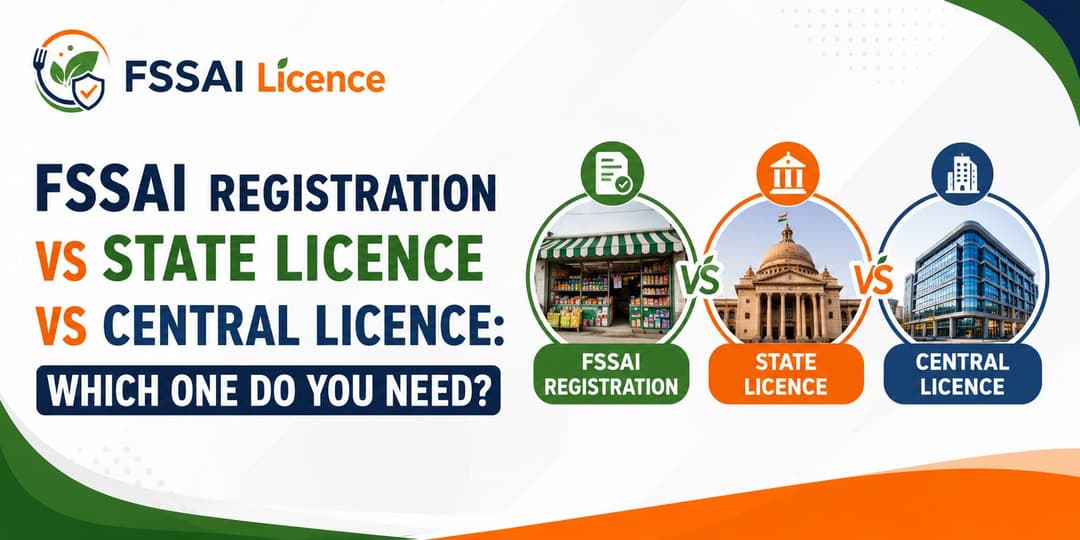
Which Category Fits Your Turnover?
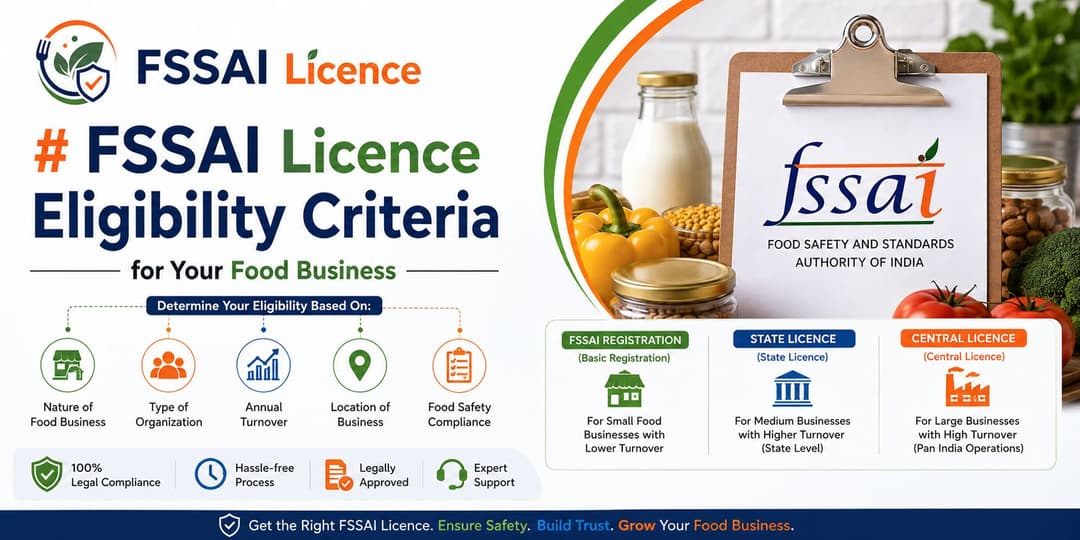
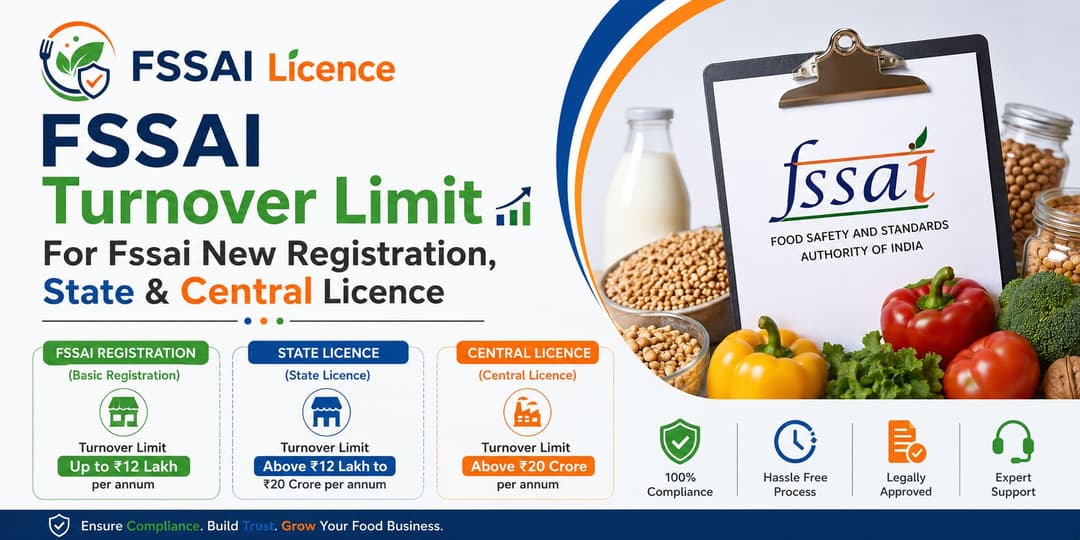
Your turnover decides which tier you fall under, and the slabs changed for new applications from 1 April 2026. A lot of pages online still quote the old INR 12 lakh limit for Basic, so look at the date on anything you read.
If you make up to INR 1.5 crore a year, you need a Basic FSSAI Licence. Ima Keithel vendors, home-based pickle makers and street-food carts mostly fall here.
If your turnover is between INR 1.5 crore and INR 50 crore, you need a State Licence, and an inspection happens before you’re approved. Restaurants, mid-sized bakeries and dairies usually sit in this band.
If you go above INR 50 crore, or you’re an importer, you need a Central Licence.
Do you run more than one outlet? Add up the turnover of all of them first, and then choose your tier.
Which Documents Do You Need, and Where Do Files Go Wrong?
Documents are where most applications stall, and rarely because something is missing. They stall because two papers disagree. Each item below comes with the mistake that most often sends a file back, so you can check your own before you upload.
You need a photo ID of the owner and a passport-size photograph. The name on the ID has to match your premises proof exactly, right down to the initials and the spelling.
Bring proof of your premises, which can be a rent or allotment paper, an ownership deed or a recent bill. Copy the address into the form as it appears on the paper instead of typing it again. If you run a market stall, ask the person who allots the space to give you a paper with your name on it.
Write out a list of the food items you make, store or sell, and include everything you actually sell. A licence that doesn’t cover your cooked fish won’t protect your cooked fish.
If you’re a processor, or you’re applying for a State or Central Licence, you also need a layout plan. Draw it to scale and show where raw and cooked food are kept apart, because plans without this usually get queried.
If water goes into your food, you need a water test report. It must show the lab’s name and the date, or it will be sent back.
If you file as a firm or a company, bring your partnership or incorporation papers. Check the deed first, since an old one that still names a former partner is a common reason for a query.
For a State or Central Licence, you also need a Food Safety Management System plan. Write it around your own kitchen, because a copied template that doesn’t match your set-up will draw questions.
Once the certificate arrives, keep a printed FSSAI Licence copy on the premises along with your pest control logs and staff medical records. Officers ask to see these on a visit, not before.
How Do You Complete the Application?
Approval only counts once every step is done. Skip one, or file details that don't match your papers, and you risk a returned file or a notice for trading without approval. Anyone searching for FSSAI registration manipur wants the order of work, so here it is.
Add up your turnover, list what you actually do and pick your tier
Create your FoSCoS account and choose the activity that fits, such as retailer, caterer or manufacturer
Type your business and premises details straight from your proof
Upload the documents for your tier
Pay the government fee for the years you want
Answer any query from the Designated Officer or Food Safety Officer before the deadline
Be ready for an inspection if you applied for a licence
Download the certificate and print the 14-digit number on your board, packs and bills
The portal is the same wherever you are in the state, so a stall in Churachandpur and a café in Imphal file the same way.
What Will It Cost?
The fee you pay to FSSAI isn’t one flat amount. It depends on your tier and on what kind of food business you run, so the number for a tea stall won’t match the one for a packaged-food unit. It’s also charged for every year of validity you choose. You can pick a validity of 1 to 5 years, which means a longer term costs more when you apply but saves you from renewing every year. Keep paying on time, because a licence whose fee goes unpaid is treated as suspended.
If someone files the application for you, remember that professional fees and other costs can come on top of the government fee. Since fee schedules get revised now and then, look at the amount shown on FoSCoS when you apply instead of relying on an older page.
Component | Applicable Amount |
|---|---|
Professional Fees | INR 1999 onwards |
The costs around the filing are where people get surprised: a water test, a layout drawing and any fix an inspector asks for. Budget for those before you submit.
How Long Does Approval Take?
A Basic Registration is meant to come through within seven days of a complete file. State and Central licences are given a 60-day window, because an officer has to inspect the premises first. That inspection is often the slow part: the enforcement team is small, and waiting for a slot can take longer than the paperwork. File early, and keep your documents ready for the day the officer visits.
What Happens at Renewal?
Renewal isn't automatic. Start it from your FoSCoS login and finish before the expiry date printed on your certificate. Section 63 of the Food Safety and Standards Act, 2006 makes trading without a licence an offence, with up to six months in jail and a fine up to INR 5 lakh, and an expired licence counts as none.
Put the expiry date in your phone the day the certificate arrives. If you hold more than one premises, each has its own date. Renewal is also the moment to change tier if your turnover has crossed a slab.
Why Choose FSSAILicence.com?
Manipur's food trade runs from market stalls to border traders, and each needs a different filing. FSSAILicence.com handles the tier choice, the documents and the follow-up, so a file doesn't stall on a small mismatch. Here's what that covers.
Before anything is filed, your tier is matched against your actual turnover and the work you do, so the first submission is the right one.
Names and addresses are compared across every document, since a mismatch there is where most returns begin.
When an officer raises a query, the reply goes in within the allowed window.
Renewal dates are tracked for each premises separately, and a reminder reaches you well before expiry.