Most FSSAI articles talk about licensing as a compliance checkbox. In Mizoram, the stakes read differently. A state health minister spent part of 2026 pushing for an advanced food-testing laboratory specifically to catch chemical residues in everyday food, a response to growing evidence linking food quality to the state's disease burden.
Whether you're running a bakery in Aizawl, a dried meat and fish trading business near the Myanmar border, or a small manufacturing unit supplying the local market, your FSSAI Mizoram approval sits inside a system the state is actively trying to strengthen right now, not one running quietly in the background.
What Does This Approval Actually Authorise?
Approval under the Food Safety and Standards Act, 2006 authorises you to manufacture, store, distribute or sell food commercially anywhere in the state. Once cleared, you receive a 14-digit licence number, the identifier food safety officers check first during any inspection.
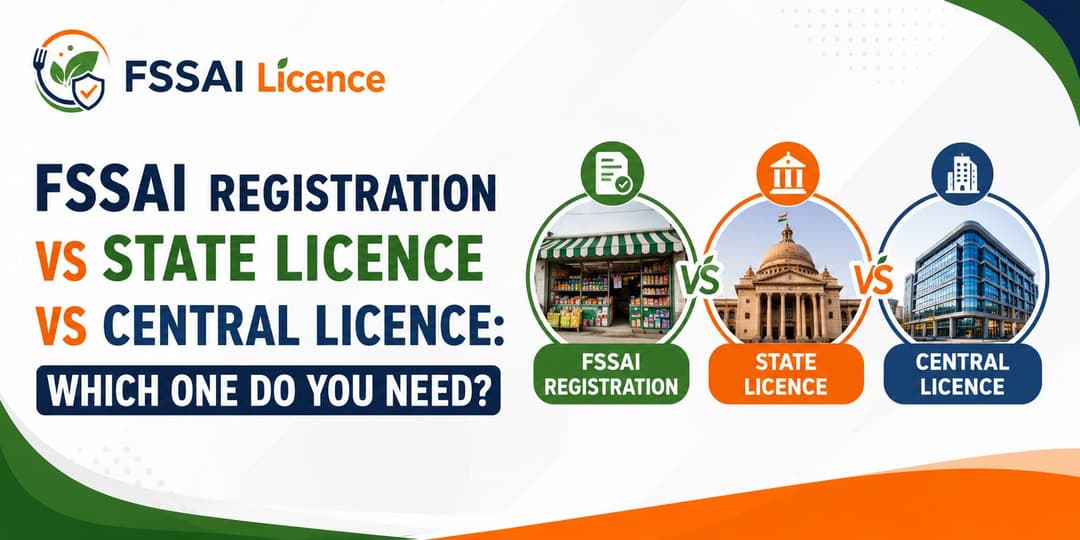
Mizoram issues this through its own Food Safety and Drug Administration wing, working under the same national framework every other state follows. The category you fall into, registration or a full licence, depends on turnover and business activity, the same rules that apply from Aizawl to anywhere else in India.
Why Does Mizoram's Cancer Data Make This More Than a Formality?
The numbers here are stark. Mizoram's age-adjusted cancer rate in Aizawl district sits at 269.4 per 100,000 males, the highest recorded anywhere in the country. Health officials pushing for a new food-testing laboratory in 2026 framed it plainly: continuous monitoring of chemical residues in food is now seen as part of reversing that trajectory, not a separate public health concern from food licensing.
This context changes what a FSSAI Licence actually represents for a Mizoram business. It isn't paperwork filed to avoid a fine. A business that takes its labelling, sourcing and hygiene practices seriously is operating inside a system the state is visibly trying to tighten, following a 2024 ministerial review that specifically flagged weak food testing infrastructure as a contributing factor to the state's poor national food safety ranking.
Who Across the State Needs to Be Registered?
If you manufacture, pack, store, transport, distribute or sell food for money anywhere in Mizoram, this applies to you. That covers Aizawl's bakeries and restaurants, trading businesses dealing in dried fish and bamboo shoot products, and the small processing units scattered through Lunglei and Champhai.
Businesses near the Myanmar border trading in food products face additional scrutiny given cross-border movement concerns. A State FSSAI Licence covers most mid-sized operations in this category, though import-specific activity can bring in central-level requirements depending on scale and product type.
Why Does Local Lab Access Affect Your Timeline?
This is where Mizoram genuinely differs from most of India, and it's worth understanding before you apply. For years, the state had no dedicated food testing laboratory of its own. Samples collected for water testing reports and compliance checks were sent to Guwahati in neighbouring Assam for analysis, a process officials themselves have described as time-consuming.
A proposal for an advanced food-testing facility was submitted to the state's General Administration Department in 2024, and by mid-2026 a technical team was assessing requirements for a lab capable of detecting chemical residues in produce. Until that facility becomes fully operational, businesses applying for a Basic FSSAI Licence involving production, where a water testing report is required, should factor in longer turnaround than they might expect in a state with established in-house lab infrastructure.
Which Category Fits Your Turnover?
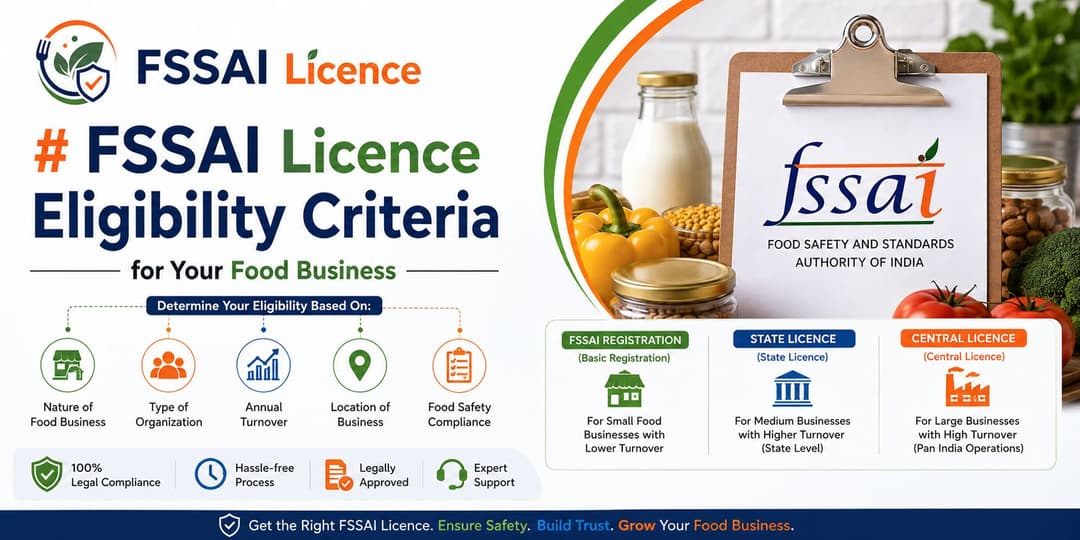
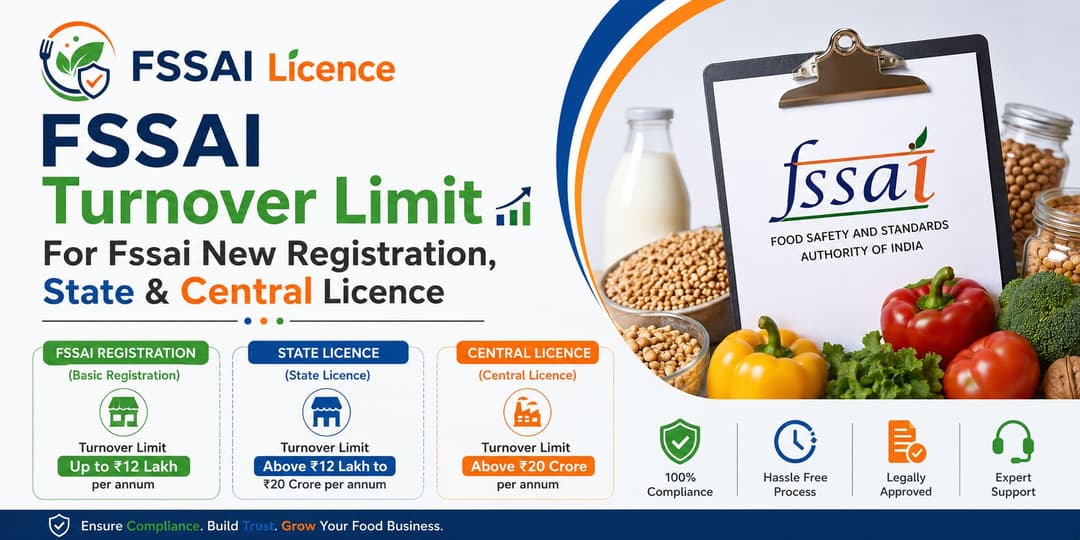
FSSAI revised its turnover thresholds nationally effective 1 April 2026, and Mizoram businesses fall under the same three-tier structure as the rest of the country.
Basic Registration covers turnover up to INR 1.5 crore, which takes in most small stalls, home-based sellers, and petty manufacturers across the state
State Licence applies once turnover crosses INR 1.5 crore and stays under INR 50 crore, covering most restaurants, bakeries, and mid-sized processing units
A Central FSSAI Licence applies above INR 50 crore turnover, and separately to importers and businesses crossing into central-licence categories regardless of revenue
Given Mizoram's relatively small business scale compared to larger states, most operators here fall under Basic or State categories, with Central licensing remaining rare outside a handful of larger operations.
What Should You Prepare Before Applying?
What you need depends on whether you're running a straightforward retail or service business, or actually manufacturing and processing food.
A shop, stall or restaurant mainly needs to establish who you are and where you're operating from.
Keep the owner's identity proo,
A photograph
Premises documentation ready
Along with a clear list of what you're selling.
A manufacturing or processing unit carries a heavier load given Mizoram's current lab access situation specifically. Beyond the basics, you'll need a layout plan of your facility, a water testing report (budgeting extra time for this given the points above), and records covering your production process and any partnership or incorporation documents relevant to your business structure.
What's the Process Of Licensing?
Completing your approval means working through each stage below in order. Skip a step or file with mismatched details, and you risk rejection or a penalty notice for trading unlicensed once your business is already running.
Work out your category based on turnover and business activity
Create your account and enter business and premises details
Upload documents matching your category
Pay the applicable government fee
Respond to any query the designated officer raises
Receive your licence number and certificate once cleared
Given the staffing constraints Mizoram's food safety department has acknowledged publicly, including relying on outsourced officers to fill gaps, applicants filing with complete, accurate documentation from the start tend to move through review faster than those expecting back-and-forth corrections along the way.
What Does It Cost?
Government fees are fixed by FSSAI nationally and depend on your category and chosen validity period, not on which district of Mizoram you're filing from.
Component | Applicable Amount |
|---|---|
Professional Fees | INR 1999 onwards |
A longer validity period chosen upfront costs more initially but spares an established business from refiling every year, worth weighing against how settled your operation already is.
How Long Does Approval Actually Take Here?
Basic Registration typically clears within about a week given clean documentation. State licences take longer, generally several weeks, and production units needing a water testing report should expect this specific step to run slower in Mizoram than in states with their own operational food lab, given the current reliance on sending samples outside the state.
What Does Renewal Involve?
Renewal isn't automatic, and that's where established businesses most often slip. You apply before your certificate's printed expiry date, not after, and continuing to trade on a lapsed approval counts as operating unlicensed, carrying the same penalty exposure as never registering at all.
Given how actively Mizoram's food safety administration is working to strengthen its own systems right now, treating renewal as a low priority carries more downside than it might have a few years ago. Businesses with operations in more than one district should track each location's renewal date independently rather than assuming one filing covers everything.
Why Choose FSSAILicence.com?
Food safety compliance in Mizoram comes with a few genuinely local complications, and getting those right from the start matters more here than in states with established testing infrastructure.
Your correct category, Basic, State or Central, gets confirmed against actual turnover and business activity before anything is filed
Water testing and layout documentation gets prepared with realistic timelines factored in, given the state's current lab access situation
Your application gets filed and tracked through to approval, so you're not left guessing whether a query from the department has gone unanswered
Renewals get managed well ahead of expiry, so your business is never caught operating on a lapsed licence