Introduction
The rulebook changed a lot this year. FSSAI notified the Licensing and Registration Amendment Regulations, 2026 through a Gazette Notification dated 10 March 2026, and perpetual validity replaced periodic renewal. Your registration now stays valid until it is suspended, cancelled or surrendered. FSSAI license Sikkim applications no longer come with a renewal cycle.
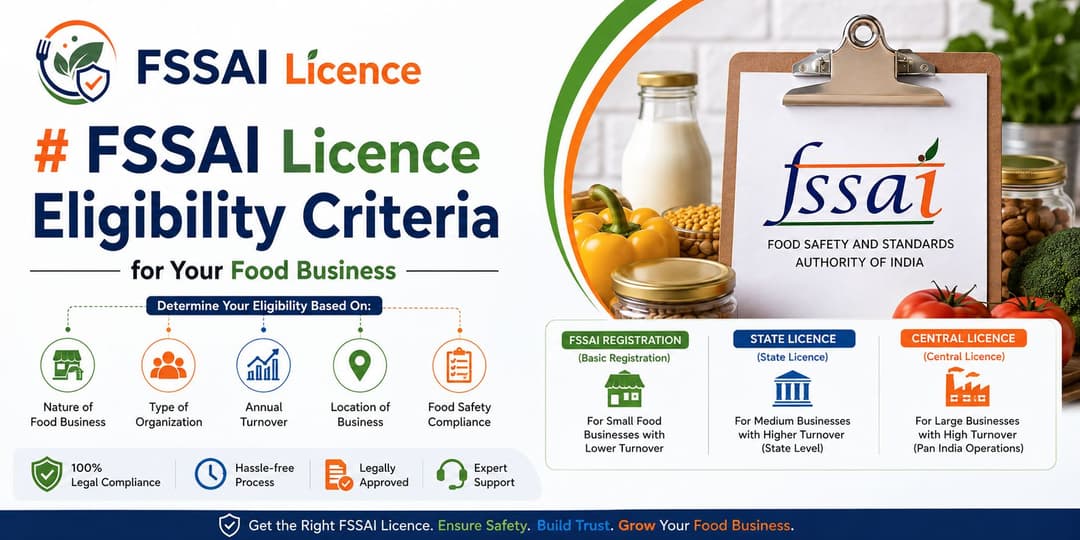
The size rules moved too. From 1 April 2026, Basic Registration covers turnover up to INR 1.5 crore, a State License covers INR 1.5 crore to INR 50 crore, and a Central License applies above INR 50 crore. Small cafes and tea stalls that used to need a state license may now qualify for the lighter route.
The rules also kept coming after March. FSSAI notified a Second Amendment on 23 June 2026 that eased record-keeping for businesses that do not manufacture food.
Sikkim has its own news. The State Food Laboratory at Singtam was inaugurated on 3 March 2026, and FSSAI signed an MoU for another food testing laboratory at Majhitar in Pakyong. More local testing capacity means more scrutiny of what reaches your customers. That is the short version of what FSSAI Sikkim compliance looks like in 2026, and the sections below break it into steps you can act on.
Who Needs a Food Business Permit in the Himalayan State?
If you make, store, sell, serve or move food, you need approval. Size doesn’t change that. Only the type of approval changes.
Picture the usual suspects. Restaurants on M.G. Marg, bakeries in Namchi, tea and cardamom processors, dairy and churpi makers, cloud kitchens, tiffin services, school canteens, wholesalers and cold storage owners all fall under the rule. So does the homestay owner who cooks dinner for trekkers. If guests eat what you make, you are a food business.
Sellers in the Rangpo industrial belt face the same law as a thukpa stall in Mangan. Retailers, transporters and online sellers are covered as well. The 2026 reforms also redefined petty food businesses and brought street vendors into clearer treatment, and FSSAI’s 27 March 2026 FAQs explain both. Check the portal for the current position before you assume you are exempt.
Which License Matches Your Turnover and Business Size?
Your yearly turnover sets the starting point. Your activity can override it.
Small sellers and home kitchens
If you earn up to INR 1.5 crore a year, a Basic FSSAI Licence is the right fit. Think momo vendors, home bakers, small cafes and grocery counters. It is the quickest route and carries the lightest paperwork.
Mid-sized operators
Turnover above INR 1.5 crore and up to INR 50 crore moves you to a State FSSAI Licence. Hotels, larger restaurants, caterers and processing units operating inside Sikkim usually land here. Expect a food safety plan and, often, a premises inspection.
Large and multi-state players
Above INR 50 crore, you need a Central FSSAI Licence. Importers, exporters, e-commerce food sellers and multi-state manufacturers need this one whatever their turnover. Dairy units and similar processors can be pushed to a state license regardless of size, so check your kind of business on the portal before you pick a category.
Crossing a threshold? You surrender or upgrade through the portal, and fee already paid in the higher category is adjusted against the new one. Your number generally stays the same.
Who Is Eligible to Apply?
Eligibility is wider than most people expect. You don’t need a big setup, a company, or years in the trade. You need a real food activity, a real address and the right category for your size.
Here is who can apply:
Any individual, proprietor, partnership, LLP, company, trust, society or cooperative handling food.
Home-based cooks and homestay owners who serve or sell food to guests.
Businesses whose turnover and activity fit the category they select.
Anyone with a premises they own or rent, backed by proof of use.
Operators applying for one license per premises, since each location needs its own approval.
Sellers whose workplace has a safe water source and basic hygiene arrangements.
What Documents Do You Need to Keep Ready?
Rejected applications usually trace back to mismatched names, blurry scans or missing proof. Fix that before you file and an FSSAI license Sikkim application moves faster.
Basic registration needs the lightest set. State and Central applicants add more, including a food safety management plan and details of what you make or sell.
Photo ID and address proof of the owner or authorised person (Aadhaar, PAN, voter ID).
A recent passport-size photograph.
Proof of premises: ownership papers, or a rent agreement with a no-objection letter from the landlord.
Business constitution proof: partnership deed, incorporation certificate or society registration.
A list of food products you make, sell or store.
A food safety management plan for State and Central applications.
Layout plan of the processing area for manufacturers.
A water test report. Hill sources vary, so manufacturers should not skip this one.
Local body trade license or approval, where it applies to your activity.
How Do You Complete the Registration?
Skip a step and the application stalls. Skip registration altogether and you risk a fine of up to INR 5 lakh and up to six months in jail under Section 63 of the Food Safety and Standards Act, 2006. Even registration-level lapses can cost up to INR 2 lakh under Section 58. So work through each step in order and keep proof of every upload.
Pick your category and kind of business on the FoSCoS portal.
Create an account with your mobile number and email.
Fill in the application with business, premises and product details.
Upload your documents and pay the fee online.
Wait for scrutiny by the licensing authority. State and Central files may call for an inspection.
Answer any query quickly, because silence is the most common reason files stall.
Download the certificate carrying your 14-digit number and display it at your premises.
How Much Will It Cost You?
Two things make up your bill. One is the government fee, which FSSAI revises, so we don’t print it here. The other is our professional fee for documentation, filing and follow-up.
Component | Applicable Amount |
Professional Fees | INR 1999 onwards |
Budget for small extras too. A water test, food handler training and medical checks for staff can add to the total, depending on your category. Under the perpetual model you also pay an annual fee to keep your approval active, and you can pay it in advance for several years at once.
How Long Does Approval Take?
It depends on the category and on how clean your file is.
Basic registration often comes through within days. A state license typically takes around a month. A central license can take 30 to 60 days. Those windows stretch when queries pile up or an inspection has to be scheduled. Premises in remote parts of Soreng or Mangan can take longer to reach, so plan your launch date with a buffer.
One 2026 detail helps. If your file was already under scrutiny and the approval is issued on or after 1 April 2026, it still comes with perpetual validity.
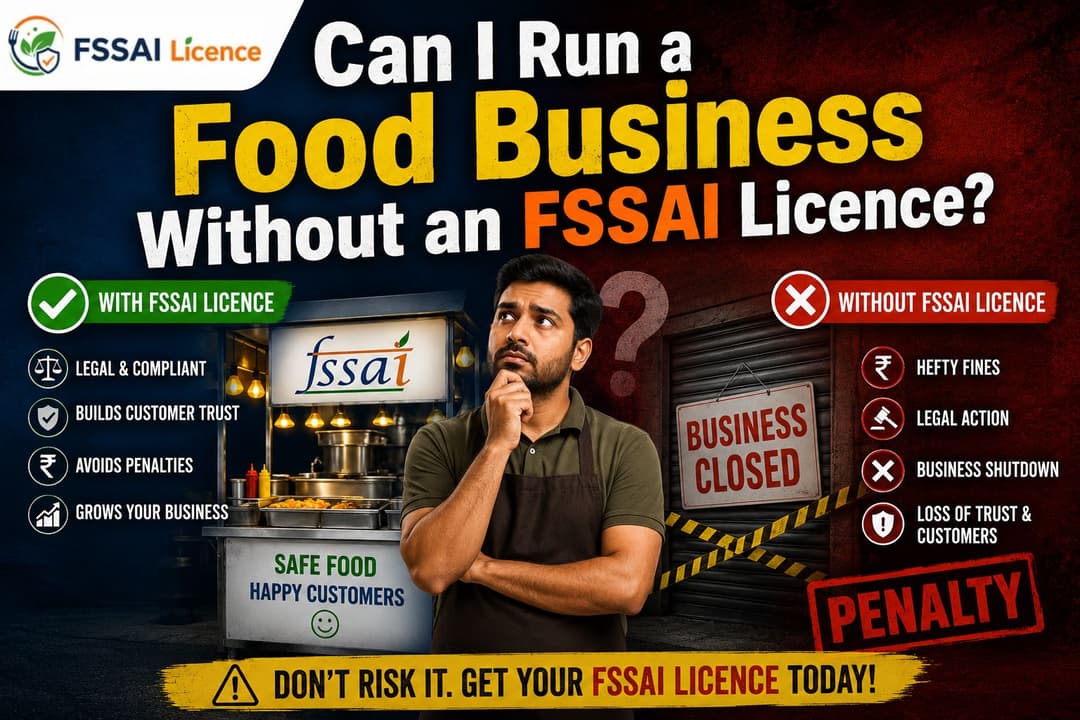
What Happens If You Run a Food Business Without One?
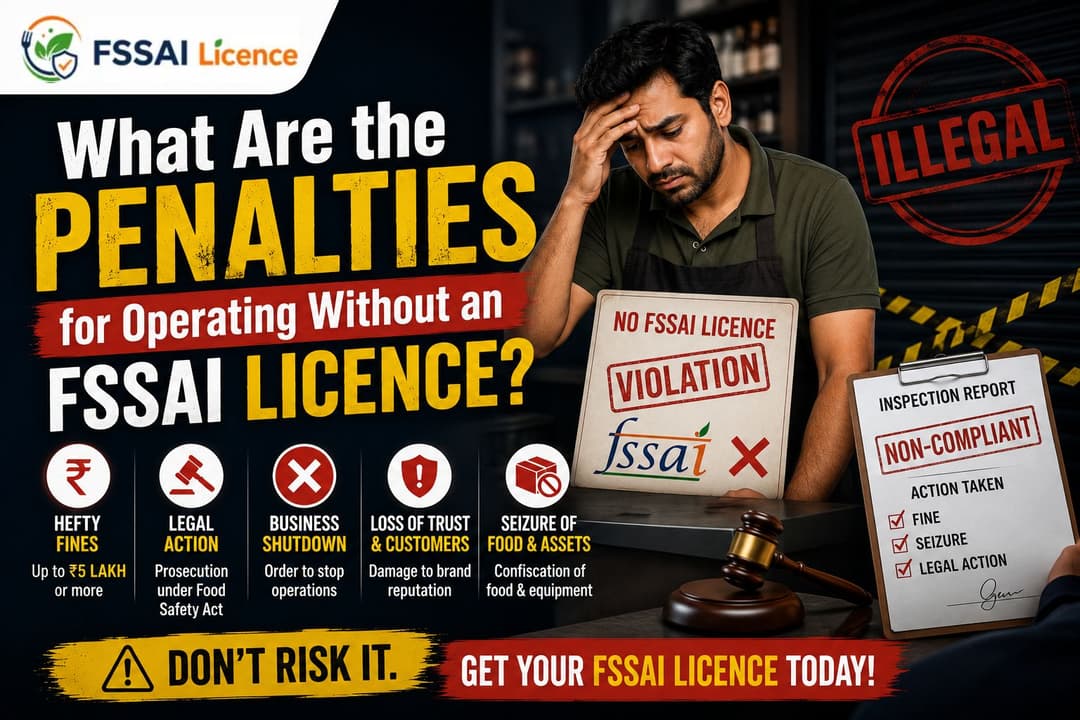
You take on real risk, and it gets expensive fast. Section 63 sets the penalty for running without a required license at up to six months in prison and a fine up to INR 5 lakh. Unhygienic processing can draw a penalty of up to INR 1 lakh under Section 56. Ignore an officer’s direction and it can reach INR 2 lakh under Section 55. An improvement notice comes first in many cases, and ignoring it can end with suspension or cancellation.
There is a quieter risk too. If you miss the annual fee or the return, your license is deemed suspended. You can lose approval without ever breaking a hygiene rule, simply by forgetting a payment.
Which Rules Must You Follow After Approval?
Approval is the start. Inspectors check what you do afterwards.
Display your license number at the premises, on invoices and on packaging. Packaged products must follow the Food Safety and Standards (Labelling and Display) Regulations, 2020, which cover ingredient lists, allergen declarations and the veg or non-veg mark. Hygiene conditions from the 2011 licensing regulations still apply, including clean water, pest control and proper storage.
Recall is now digital. FSSAI issued an order on 18 March 2026 to put food recall functionality inside the compliance portal, building on the Food Recall Procedure Regulations, 2017. The Second Amendment of 23 June 2026 also matters: if you only trade or retail food, you no longer keep daily production and raw material records, and FIFO or FEFO stock rules do not apply to retailers. Manufacturers still keep both.
The 2026 amendment adds computer-assisted, risk-based inspections as well, and authorities can order third-party audits. Shut down a unit? Tell the licensing authority in writing within 30 days and surrender your certificate.
How Does Organic State Status Affect Local Food Sellers?
Sikkim calls itself India’s first fully organic state, and buyers expect that from you. Tourists ask about it. Retailers in Delhi and Kolkata put it on shelf talkers. Large cardamom, tea, buckwheat and millet products all ride on that image.
Here is the catch. A license does not let you print “organic” on a pack. That claim needs certification under the Food Safety and Standards (Organic Foods) Regulations, 2017, along with the Jaivik Bharat logo. Selling processed food with an organic claim and no certificate invites a misbranding case, even if the farm behind it is spotless.
The state is also investing in processing. An integrated organic processing plant is coming up at Rangpo, and a federation of cooperatives certifies farmland across several states. If you plan to sell into that chain, your FSSAI Sikkim paperwork is the first thing a buyer will ask to see.
Can You Renew, Modify or Transfer Your License Later?
Renewal is gone, but upkeep is not. Your approval stays valid until suspended, cancelled or surrendered. You still pay the annual fee and file returns. Manufacturers file their annual return by 31 May each year. Miss either and the license is suspended until you clear what is due.
Changes work through modification. A new address, a new product line, a change of partners or a turnover jump each need an update in the portal. Approval is premises-specific, so a second outlet in Namchi or Gyalshing needs its own. Selling the business? The new owner generally applies in their own name rather than inheriting yours. Keeping your FSSAI Sikkim records current protects you during an inspection.
Why Choose Us At Fssailicence.com?
You can file this yourself. Plenty of people do. But mismatched documents and unanswered queries cost weeks, and we handle them every day. Our consultants have helped thousands of food businesses across India, and we know how an FSSAI license Sikkim file gets read by the authority.
Here is what you get when you work with us:
11,000+ FSSAI licenses approved over 10+ years of experience.
Help picking the right category before you pay for the wrong one.
Document checks so your file goes in clean.
Application filing, authority follow-up and status tracking.
Support after approval for annual fees, returns and modifications.
A free call with a consultant before you commit.