Few places in India depend on a ship schedule the way these islands do. Flour, packaged snacks and dairy come from the mainland, fish comes off boats, and tourists crowd beaches from Radhanagar to Laxmanpur through the dry season.
One rule covers all of it: if food changes hands for money, you need approval. Getting FSSAI Andaman sorted at the start is easier than explaining a missing number to an officer standing at your counter.
What Does Approval Mean on an Island Chain?
Approval is permission under the Food Safety and Standards Act, 2006 to sell, make, re, or carry food for money. On the island,s the Commissioner of Food Safety leads the system, and the Deputy Commissioner, South Andaman, acts for the Commissioner on the ground, alongside district Food Safety Offices.
Your application goes in online, but it lands with the district office that covers your premises. That's also where an officer comes from if something goes wrong. You receive a 14-digit number that belongs on your board, your packs and your bills.
Who Is Covered, Beach Hawkers Included?
Everyone who makes, packs, stores, carries, eats, or sells food for money. That means restaurants and dhabas, bakeries and sweet stalls, grocery shops, fruit and vegetable vendors, poultry and fish sellers, and mobile food vendors.
It also means the beach hawkers. When the department ran an awareness programme at Laxmanpur beach on Shaheed Dweep, itinerant beach vendors were the audience it picked. A seasonal stall isn't exempt because it trades for a few months.
How Closely Are the Islands Being Checked?
Closely, and for years. In December 2020, two teams checked about 107 restaurants in South Andaman, registered cases against four and served improvement notices on 51. Weeks later, officers spent three days on Swaraj Dweep (Havelock), checking around 59 restaurants plus dhabas and other vendors, and registered cases against 13 restaurant operators. In February 202,1 it was Shaheed Dweep's turn, where 26 restaurants and 20 mobile vendors were among those inspected, and violations turned up at three premises.
The more recent signals are quieter but consistent. An October 2024 hygiene case at a restaurant in Bhatu Basti, Sri Vijaya Puram, prompted public calls for tighter monitoring of eateries. In March 2025, officers testing more than 50 fish samples at Junglighat market found formalin in four, and the positive samples went on to accredited labs. FSSAI's State Food Safety Index had already ranked the islands second among Union Territories for 2020-21. A FSSAI Licence on display is the simplest way to show you're inside that system.
What Does Island Supply Mean for Your Stock?
Almost everything on a shelf here arrived by sea or air first. In March 2022, the department said it was keeping a strict vigil on food products arriving from the mainland and sampling them. For you, that has two practical consequences.
First, your approval doesn't cover a supplier's. If you buy from a mainland wholesaler, ask for their FSSAI number, check it, and keep it with the invoice. Second, fish and other perishables are where sampling concentrates, so a stall that can show where its stock came from and how it was kept cold is easier to defend. Lab results can take a while to come back, so book any water test early.
Which Category Fits Your Turnover?
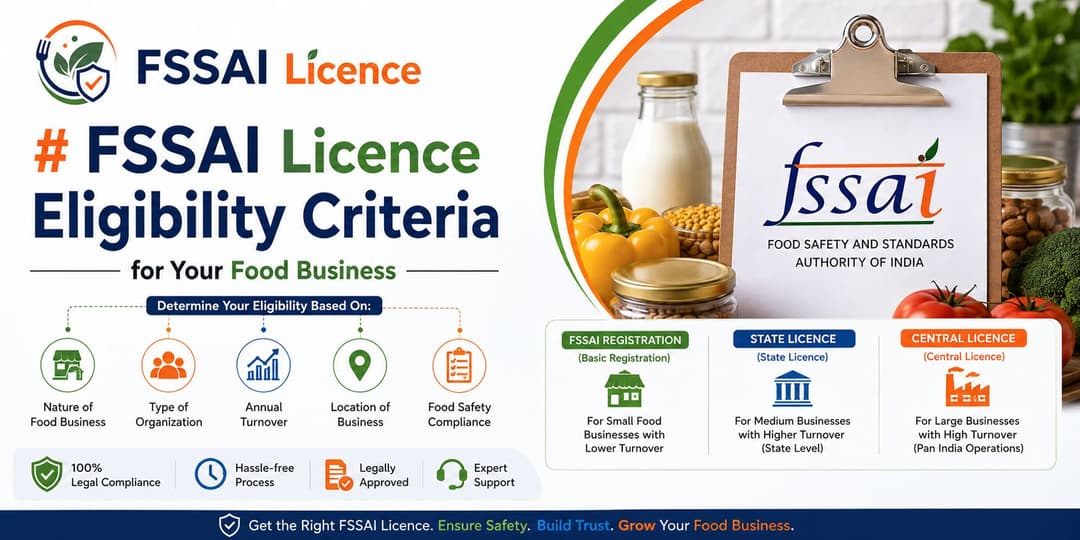
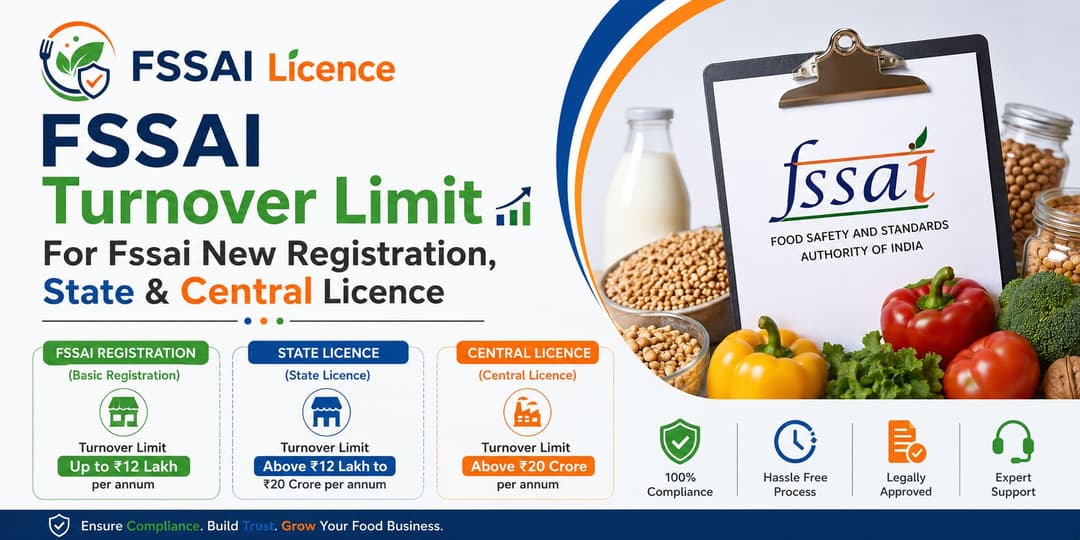
Turnover decides the tier, and the slabs changed for new applications from 1 April 2026. Older pages still quote the previous limits, so check the date on whatever you read. Most island businesses are small, which keeps the first two tiers busy.
If you earn up to INR 1.5 crore a year, a Basic Fssai Licence is what you need. That is where beach hawkers, tea stalls, tiffin sellers and home bakers usually fall.
If your turnover is between INR 1.5 crore and INR 50 crore, you need a State Licence, and an inspection happens before you’re approved. Resort kitchens, busy restaurants and packaged-food makers mostly sit in this band.
If you go above INR 50 crore, or you’re an importer, you need a Central Licence.
If you run outlets on more than one island, work out how your combined turnover lands before you pick.
Documents Required
Start with the papers that take longest to arrange, because one missing item can hold up the whole file. The list below runs slowest first, so you can begin at the top and finish with the quick ones. One local check applies to every item: since Port Blair was officially renamed Sri Vijaya Puram in 2024, older papers and some portals still use the old name, so make sure the address reads the same on every document.
A water test report showing where water goes into the food. It needs a sample and a lab, so book it first.
A layout plan for processors and State or Central applicants. Show where raw and cooked food stay apart.
Premises proof, such as a rent agreement, an ownership paper, or the lessor's consent. If the space is leased, the lessor's letter is often the slowest one.
If you’re applying for a State or Central Licence, you also need a Food Safety Management System plan.
If you file as a company, a firm or any other entity, bring your partnership deed or incorporation papers.
Make a list of the food items you’ll be making, storing or selling.
Keep a photo ID and a passport-size photo of the owner ready. This one is usually the easiest to arrange.
How Do You Complete the Application?
Approval only counts once every step is done. Skip one, or file details that don't match your papers, and you risk a returned file or a notice for trading without approval. Here's the order of work.
Total last year's turnover and list what you really sell
Decide between Basic Registration and a licence from that
Sign in to the national FoSCoS portal and pick the activity that matches your business
Enter your premises address exactly as it reads on your proof
Upload your papers and pay the fee for the validity you want
Answer questions from the district Food Safety Office within the time given
Get ready for a premises visit if you applied for a licence
Download the certificate and print the 14-digit number where customers can see it
Swaraj Dweep and Shaheed Dweep both fall under South Andaman, the same district as Sri Vijaya Puram, so a beach stall and a city restaurant use the same portal and the same district office.
What Should You Budget For?
FSSAI charges its fee for every year of validity, and the amount depends on your tier and the kind of activity you do, so there isn’t one figure that applies to everybody. The fees can also change, so look up the current amount before you apply. If you choose a longer validity, you pay more at the start, but you don’t have to renew every year.
Component | Applicable Amount |
|---|---|
Professional Fees | INR 1999 onwards |
Ask any consultant what's inside a quote. The government fee and the professional fee are separate lines, and the water test is usually a third.
How Long Until You Hear Back?
Basic registration is meant to come through within seven days of a complete file. A State FSSAI Licence has a 60-day window, because an officer inspects first. Delays almost always trace back to an address that doesn't match the premises proof or a missing water report. The visit itself can depend on how soon an officer can reach your island, so file early.
What Happens When Renewal Comes Due?
Renewal isn't automatic. Start it from your FoSCoS login and finish before the expiry date printed on your certificate. Trading on an expired licence is trading without one, and the penalty for that sits in Section 63 of the Act and can include jail.
Set a reminder for the day the certificate arrives. If you trade from more than one island, each premises has its own date, so track them separately.
Why Choose FSSAILicence.com?
Island businesses face the same laws as mainland businesses, with fewer people nearby to ask. FSSAILicence.com handles the tier choice, the papers and the follow-up, so a file doesn't stall on a small mismatch. Here's what that covers.
Your tier gets matched against your real turnover and the kind of work you do before anything is filed, so the first submission is the right one.
Each document is read for the same name and address, including the Port Blair and Sri Vijaya Puram mismatch, since it’s an easy one to miss.
If the district office sends a query, it gets answered inside the allowed window, so your application doesn’t sit stuck.
The renewal date for every premises is tracked separately, with reminders arriving early enough that you aren’t scrambling at the last minute.