Food License in Kerala: Process, Documents, Fees and Timeline
Food license registration in Kerala begins with identifying the food business operator and the activities carried out at the premises. A bakery in Kochi, a restaurant in Kozhikode and a food manufacturer in Palakkad may need different FSSAI authorisations, even when all three sell to customers in Kerala.
Basic Registration, a State Licence and a Central Licence are separate categories. The applicable category depends on the eligibility criteria for the business, including its activities, scale and location. The FoSCoS portal is used to submit the application to the appropriate authority.
Government charges depend on the category and the applicable fee schedule. Processing time also varies: an application that requires clarification or inspection should not be treated as approved merely because it has been submitted. Keep the application reference so you can check its status and respond to any communication from the authority.
FSSAI Licence is a private service provider, not FSSAI or the Government of Kerala. Applicants can seek assistance from FSSAI Licence with Basic Registration, State Licence, Central Licence and renewal applications.
Introduction
The Food Safety and Standards Act, 2006 provides the legal framework for food safety in India. A food business operator must obtain the applicable FSSAI registration or licence to carry on a food business, subject to the law and its applicable exemptions. The obligation is not limited to restaurants: it can extend to businesses that manufacture, store, distribute, transport or sell food.
A home-based food business is not automatically outside the system because it operates from a residence or takes orders online. The operator should assess the activity and scale against the applicable registration and licensing criteria before starting sales.
FSSAI authorisation concerns food safety. It does not automatically replace other permissions that may apply to the premises or business under Kerala or local-body rules. For example, whether a local trade permission is needed depends on the establishment and the relevant local requirements.
Use the legal name of the operator consistently when dealing with food safety authorities. A business trading name may be different from the name of the person, company or other entity responsible for the operation. Establishing that distinction at the outset helps identify who will hold the authorisation.
Why Is Approval Taken So Seriously in Kerala?
Kerala checks, and it checks in bulk for food License registration kerala for compliance issues. In August 2023, the Food Safety Department ran a statewide drive called Operation FoSCoS and carried out 4,463 inspections in a single day. It told 929 establishments without a license to stop operating, and it found another 458 running on a basic registration when they needed a full license. That last figure is the one to remember, because choosing too low a category is an easy mistake to make and an easy one for an inspector to spot.
Pressure had been building for a while. After a run of food-poisoning cases in January 2023, the state’s health minister said unlicensed eateries would not be allowed to operate, and that only an FSSAI-licensed caterer could serve at events held in auditoriums. A 2022 Onmanorama report, using GST figures, had also found that 96 of 162 GST-registered restaurants in Thiruvananthapuram held no FSSAI license. With cross-checks like that, a missing certificate rarely stays hidden for long.
What Does Approval Actually Mean for Your Business?
An approved FSSAI registration or licence identifies the food business operator and the authorised premises and activities recorded on the certificate. It is evidence of authorisation under the food safety framework; an application receipt or payment acknowledgement is not the same as an issued certificate.
Check the issued certificate against the business records. The operator's name, premises address and listed activities should describe the actual operation. If the business changes its address, ownership details or activities, assess whether a modification or a fresh application is required rather than assuming the existing certificate covers the change. The appropriate route depends on the change and current FoSCoS rules.
Approval is not a guarantee that every product or food-handling practice complies with the law. The operator remains responsible for applicable hygiene, food safety and labelling requirements. An inspector may examine the premises and records as part of regulatory oversight.
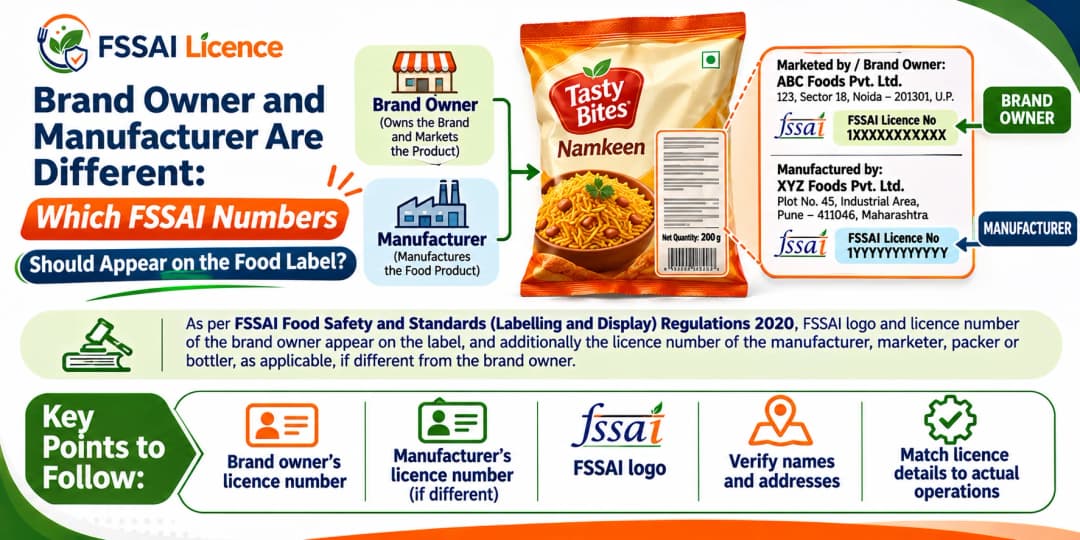
Keep the certificate accessible at the establishment and follow the applicable requirements for displaying the FSSAI number. Packaged food labels must also comply with the relevant labelling rules; the certificate alone does not make a label compliant.
Which Category Fits Your Business?
The three principal categories are Basic Registration, State Licence and Central Licence. Basic Registration is intended for eligible petty food business operators. State and Central licences apply according to the criteria for the relevant kind of business, including scale and other prescribed conditions.
A turnover figure alone does not settle every application. The operator must also select the correct kind of business on FoSCoS and consider any activity-specific capacity or other criteria. A small retailer and a manufacturer with the same turnover, for example, should not assume that identical information produces the same category.
The current turnover thresholds and category criteria must be checked against the latest FSSAI rules and FoSCoS eligibility criteria before filing. The earlier ₹12 lakh threshold for Basic Registration should not be assumed to remain current without that check.
For a business with more than one activity at a premises, assess all the activities together. Do not choose a lower category solely because one part of the operation qualifies for it. If the business grows or changes its activities, reassess its category under the rules in force at that time.
Which Activities Need a Higher Category Whatever Your Turnover?
Some food businesses must consider criteria beyond turnover when selecting an FSSAI category. Importing food, for example, falls within Central Licence requirements; a low sales figure should not be used as the sole basis for choosing Basic Registration.
Manufacturing and processing categories can depend on production capacity and the nature of the operation. Milk and meat operations have their own category criteria, so an operator should use the relevant activity classification rather than a general retail turnover test. Check the current capacity thresholds and activity classifications on FoSCoS before selecting a category.
Businesses operating in more than one state should also assess the licensing position of their head or registered office separately from that of each operating unit. Confirm the current head-office and unit-wise licensing requirements for the business structure and activities.
For a Kerala business that both manufactures and sells food, the manufacturing activity may affect the category even if the retail counter is small. Enter the actual activities and capacity in the eligibility assessment; do not describe a processing unit only as a shop to obtain a lower category.
Who Is Eligible to Apply?
The applicant should be the person or legal entity operating the food business. Depending on its constitution, that may be an individual proprietor, partnership, company or another organisation. The application should identify the operator responsible for the activity at the stated premises, rather than a person who merely owns the building.
A tenant can operate a food business from rented premises, subject to the applicable requirements and the terms on which the premises are occupied. A landlord's authorisation for a different food business does not automatically cover the tenant's operation.
For a company or partnership, the person completing the application should be authorised to act for the entity. The entity's legal name and the address of the food operation should be entered accurately; a brand or outlet name alone may not identify the applicant.
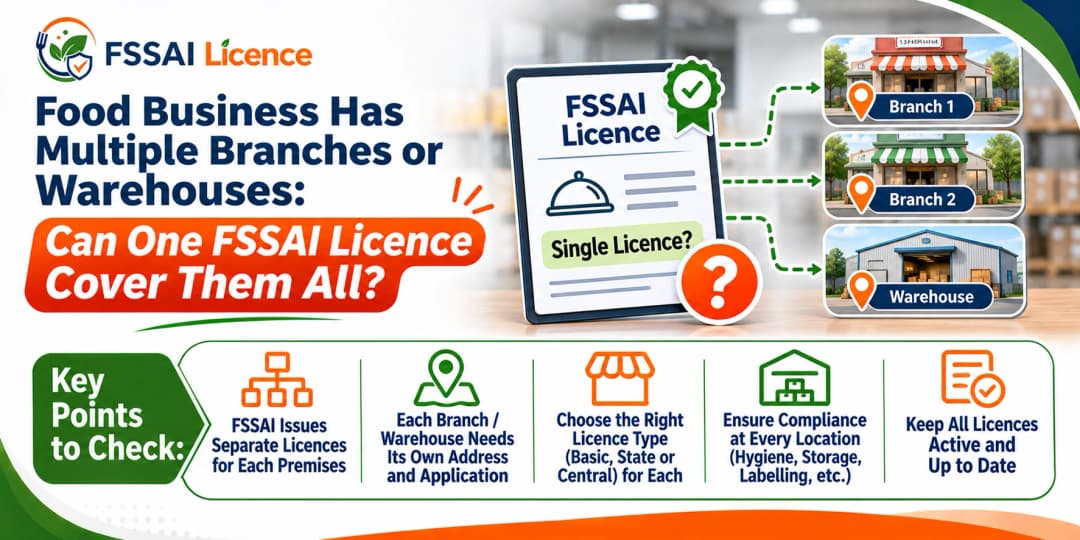
Where several outlets or establishments are involved, assess the authorisation needed for each premises and the business's office arrangements. The correct approach depends on the structure and activities of the operation. Confirm the applicable premises-wise requirements on FoSCoS before filing a consolidated or separate application.
What Documents Do You Need?
The FoSCoS document list varies by registration or licence category and the kind of food business. Prepare clear, legible files and check the portal's applicable requirements before submission. A small food retailer's checklist may differ substantially from a manufacturer's.
Depending on the application, supporting records may include:
- Proof of the applicant's identity and, where applicable, proof of the business entity's constitution.
- Evidence of possession of the premises, such as ownership records or a rental agreement, and any consent required for the application.
- An authorisation identifying the person permitted to act for a company or other entity.
- A layout or plan of a manufacturing or processing unit, details of equipment and production capacity, where applicable.
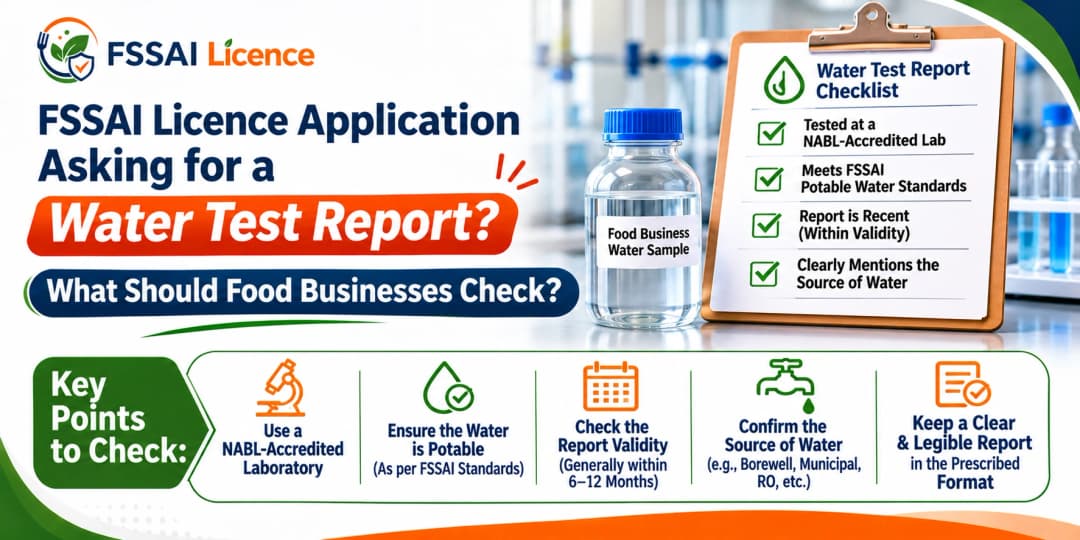
- A water analysis report or other activity-specific records when required for the particular operation. Confirm the current conditions and accepted reports for the selected FoSCoS category.
Keep the original records available and ensure that names, addresses and capacity figures agree across them. Do not upload a document for a different premises simply because it relates to the same business owner.
How Do You Apply For License?
Step 1: Pick Your Category
Match your turnover and your activity to Basic, State, or Central before you open the portal.
Step 2: Create Your FoSCoS Account
Register with your mobile number and email, then verify the OTP.
Step 3: Choose Kerala and Your Kind of Business
Select the state and the kind of business you run, such as a restaurant, bakery, manufacturer, or cloud kitchen.
Step 4: Fill the Right Form
Use Form A for Basic Registration and Form B for State and Central in the registration for fssai License kerala.
Step 5: Upload Documents and Pay
Attach your files and pay the government fee online.
Step 6: Save Your ARN and Track It
Note your Application Reference Number, check the status regularly, and answer any officer queries within 30 days.
Step 7: Attend Inspection and Download Your Certificate
Face the inspection if the officer asks for one, then download the certificate from FoSCoS; it reaches you there, not on paper. And finally, you have the food and safety license kerala to showcase at your establishment.
What Does It Cost?
Separate the statutory government fee from any professional charge before deciding how to apply. The government fee is payable for the relevant registration or licence application; a consultant's fee is a private service charge and is not set by FSSAI as the application fee.
The amount payable can depend on the category, kind of business and applicable period or fee rules. Check the current government fee schedule and the amount shown on FoSCoS for the selected application before payment. Do not assume that an older annual fee or a fee quoted for a different category applies to your business.
If you engage FSSAI Licence, ask for a written breakdown of the government fee and professional charges. Confirm what the service covers, whether taxes or extra charges apply, and how payment evidence will be shared. Charges for obtaining supporting records, if needed, may be separate from both the application fee and professional charges.
Payment is part of the application process, not confirmation that the authority has granted the registration or licence. Retain the payment acknowledgement with the application reference.
What Is the Timeline From Filing to Certificate?
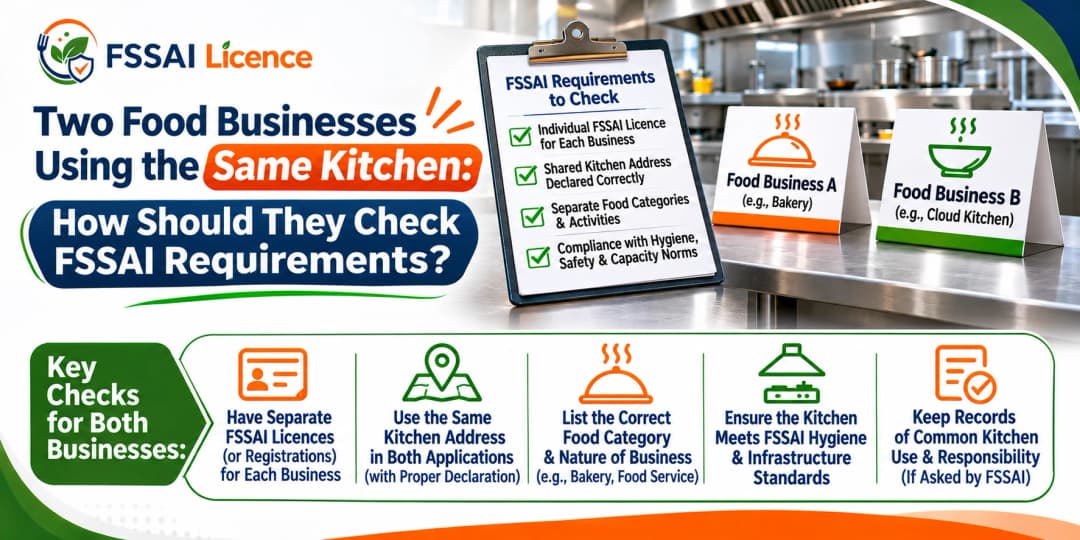
A restaurant, bakery, wholesaler or home kitchen in Kerala must obtain the applicable FSSAI registration or licence before starting food business operations. The category—Basic Registration, State licence or Central licence—depends on the nature and scale of the business. Applications are submitted through the Food Safety Compliance System (FoSCoS).
For Basic Registration, the registration authority must generally grant registration, reject the application with reasons, or issue a notice for inspection within seven days of receiving the application. If an inspection is ordered, registration may be granted after the authority is satisfied with the premises’ safety and hygiene conditions. The regulations provide a 30-day period for this stage.
For a State or Central licence, the designated officer is generally required to issue the licence within 60 days of receiving a complete application, subject to the applicable procedure. Check the application reference number (ARN) on FoSCoS for updates and respond promptly to requests for clarification.
The rules allow an applicant to begin business in certain circumstances if the authority does not act within the prescribed period. This is not the same as receiving a certificate; check the conditions applicable to your application before relying on that provision.
These periods are regulatory limits, not guaranteed processing times. Allow time for scrutiny and any inspection when planning your opening date.
Does the Certificate Still Expire, and When Do You Renew?
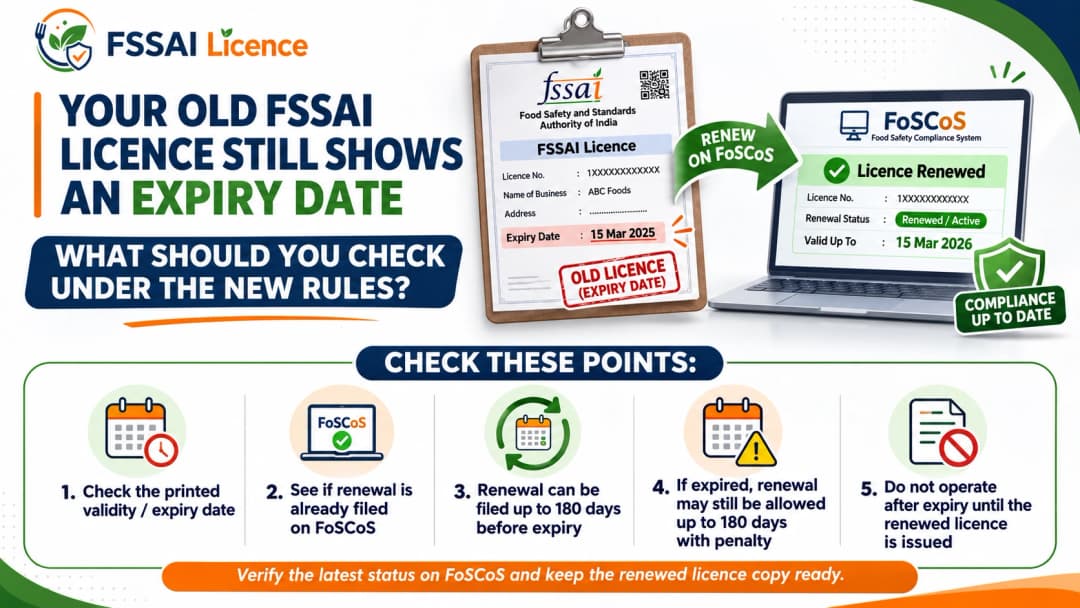
Check the validity details on the issued certificate and the current requirements shown on FoSCoS. Do not rely on an old renewal reminder without checking whether the rules applicable to your authorisation have changed.
Confirm the current validity, renewal, periodic fee and late-fee rules before advising an operator of a renewal deadline. Earlier certificates and current regulatory changes may need to be assessed separately; the date printed on a certificate should not be treated as the complete answer without that assessment.
Keep a record of the certificate number, issue details and any action date applicable to the business. Review those details well before the action date, leaving time to resolve an incorrect profile or other issue in the portal. FoSCoS is the relevant portal for the application or renewal route shown for the authorisation.
If an authorisation has lapsed, check the current rules and portal instructions before continuing to operate or submitting another application. Do not assume that paying a fee automatically restores an expired authorisation. FSSAI Licence offers renewal assistance for operators who want help with the process.
What Else Does Kerala Expect Once You Are Approved?
Getting the certificate is the start, not the finish, and Kerala has added its own expectations on top of the national rules.
Health cards for food handlers. Kerala made health cards mandatory for employees at places that cook, distribute, or sell food from 1 February 2023, and later extended the deadline to 16 February. You need a medical certificate from a registered doctor in the prescribed format, with a physical examination and blood test, and the card is valid for one year. The minister also announced that food businesses would need a hygiene rating.
A trained food safety supervisor on the premises, plus pest-control records and clean floors, walls and ceilings.
Your certificate on display where customers can see it, with your 14-digit number on bills and packaged-food labels.
A third-party audit if you fall in a high-risk category. FSSAI’s audit regulations require annual audits for six high-risk categories, and in September 2021 FSSAI suspended the licenses of 15 Kerala food businesses that skipped them despite two improvement notices.
As far as we know, the health card requirement has stayed in force since 2023, but check the Food Safety Department’s current notices before you rely on it.
Why Do Applications Get Rejected?
An application can encounter difficulty when the information submitted does not match the actual operation or when the applicant does not respond adequately to an authority's query. Selecting an unsuitable kind of business or entering inconsistent particulars can prevent the authority from assessing the application properly.
A clarification request is not the same as an approval or a rejection. Read the communication carefully, identify what the authority has asked for and respond through the permitted channel within the applicable period. The response period and available action depend on the current FoSCoS workflow and the notice issued.
If the authority rejects an application, review the stated reason before filing again. A fresh application that repeats the same error may face the same problem. Where a correction or other remedy is available, follow the instructions in the decision and the rules applicable to that case. Confirm the current remedy and any deadline against the decision and applicable rules.
Keep copies of submissions and communications. They help establish what was filed and which point remains unresolved if the application needs further attention.
How Do You Avoid Unofficial Agents?
Private assistance is optional. A service provider is not the food safety authority and cannot guarantee approval or describe its professional charge as a government fee. Ask who is providing the service and whether the business is dealing with a private provider or the authority.
Before engaging an agent, obtain a written scope and fee breakdown. Establish who will submit the application, how status updates will be shared and who will respond if the authority raises a query. Ask for copies of the submitted application, payment acknowledgement and final certificate when available.
Review the information entered in your name before authorising submission. The food business operator remains responsible for the accuracy of the application and for operating in accordance with applicable food safety requirements. Avoid signing blank declarations or allowing an agent to describe an activity that the business does not carry out.
FSSAI Licence is a private service provider. Its charges, if you choose to engage it, should be distinguished from the government fee. You can also use FoSCoS directly to submit and track an application.
Why Work With fssailicence.com?
Most FSSAI applications don’t fail because the business did something wrong. They stall over a mismatched turnover figure, a wrong license category, or a missing document. Each one means an officer query, a delay, and sometimes a rejection that sends you back to start. We catch those problems before you file, so the application goes through the first time.
We start by checking your business against the 2026 turnover and capacity limits, so you apply for the right license: registration, State license, or Central license. Then we go through your documents, draft what’s missing, and file on FoSCoS ourselves. After that we track your ARN and follow the application until it’s approved, so you don’t have to keep checking the portal.
If an officer raises a query, we write the reply and resubmit it. Our support doesn’t end at the first license, either. We also handle amendments, renewals (including older certificates that need updating to the current system), and the paperwork that comes with them.
We work online, so it makes no difference whether you are in Ernakulam or Kannur, and if you want a hand with FSSAI Kochi filings in particular, just ask.